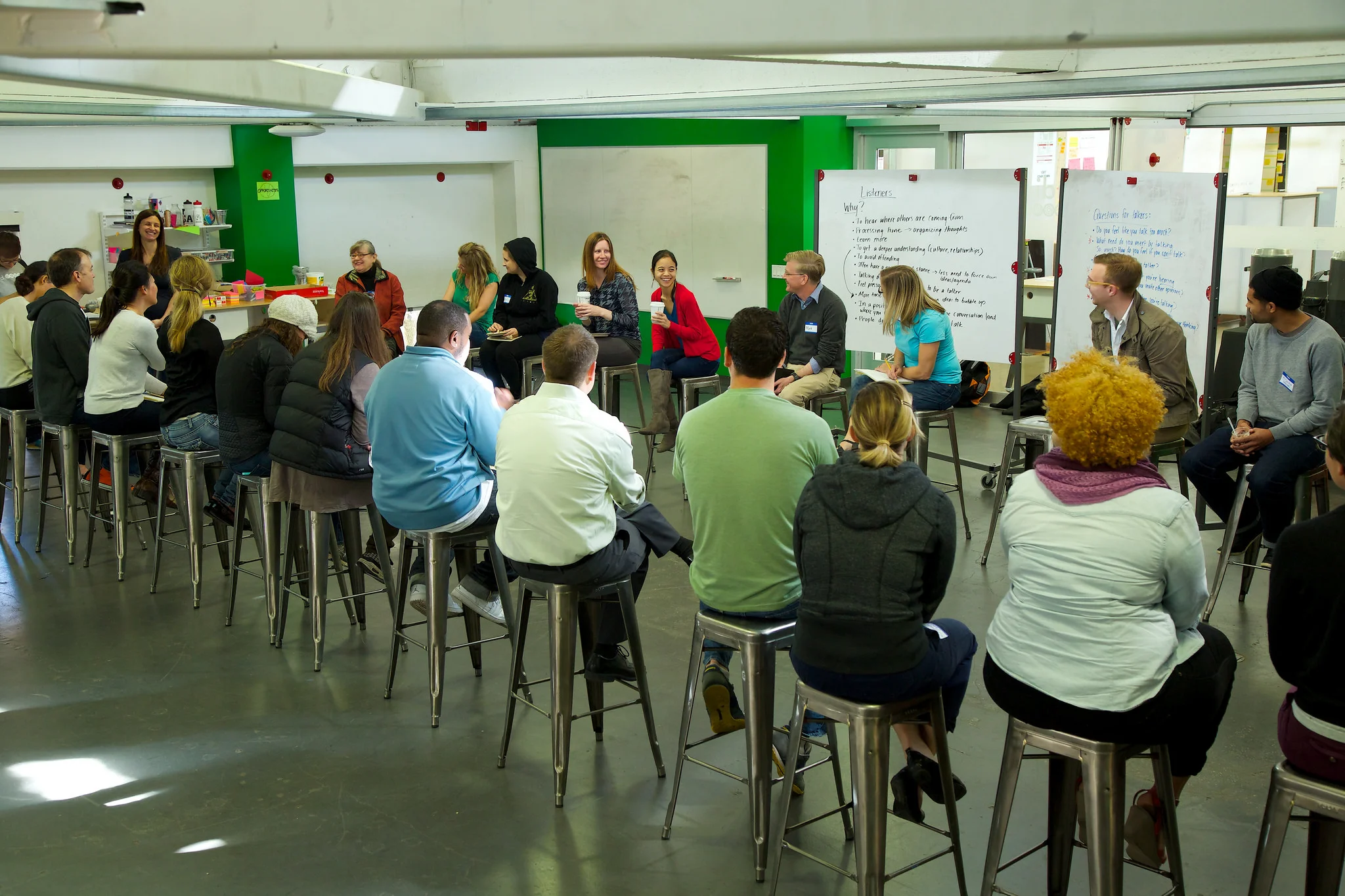
The d.home Team was a programmatic prototype we tested to see if we could deeper engage with educators to instill design mindsets in them. We continue to learn from this prototype.
We saw teachers adopt a new language. They took bite sized chunks of the design process and used it to transform their curriculum, which included incorporating new activities they experienced as participants in the d.home team back at school. Teachers and school leaders also used the process to navigate changes and challenges in their school, to train their staff, and to coach students through design challenges. Here is a sneak peak of our internal evaluation of the program, informed by deep empathy interviews and observation at all of our school sites.

Of these areas of influence, we had the most impact on "themselves" and their "classrooms," including some impact on "leadership"
We found 6 key areas of support that schools need to go deeper with design thinking:
- Context on why design thinking matters
- Scaffolding and coaching for integrating design thinking in curriculum
- Support to seek and define a challenge at school
- Design challenge implementation kit
- Design thinking experts on call
- Leadership and change management strategies
Take a look below to read more of the teachers' reflections in their own words.
I don't consider myself a creative...
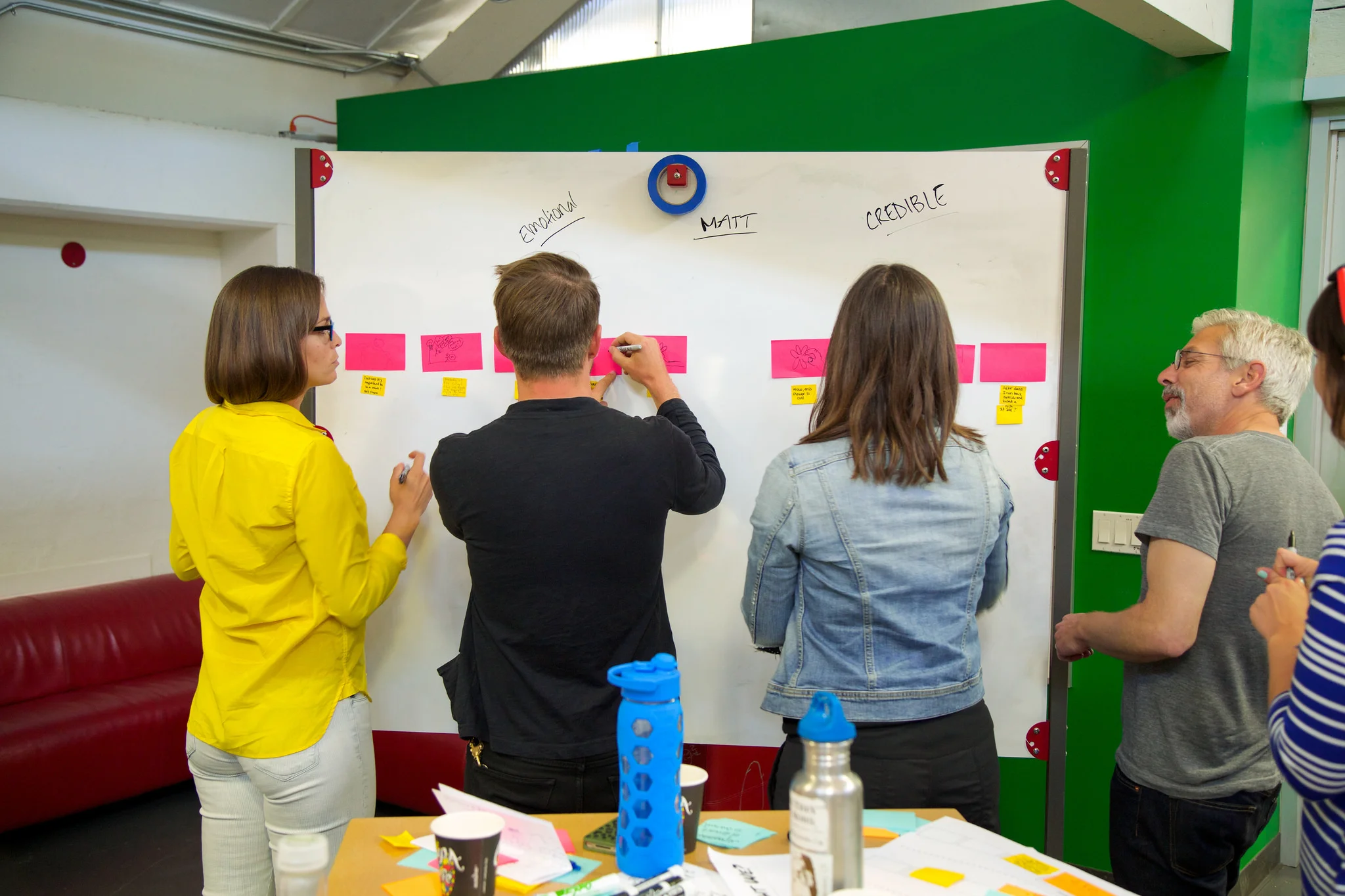
“I don’t consider myself a creative. I think of a graphic designer or artsy, more visual and performing people. I consider myself to be logical and practical. I learned to push myself to just think of any and all ideas, before I would limit [myself], doubt myself, shut down ideas. The [d.home team] has taught us to go pie in the sky, and then from there, widdle it down.”
Now I start with possibility, not constraint...
“Now I start with possibility, not constraint. For example, in our staff meeting to plan our mini courses, I told them, ‘Don’t worry about money, about transport, I just want you to start with saying your dream for your course!’ I would have never said that. I would have started with ‘You each have $1,000…’
”
I really understood empathy when I heard directly from parents that they felt left in the dark...
I feel more connected to a larger movement...
“I had a BIG empathy challenge after changing sites to co-locate with another school. I was able to approach the problem with creativity and empathy. I met with the mayor, the head of PTO, worked with the principal, and created a task force. Talking to the parents, I came to understand that they were left in the dark about the new initiative…”
“After participating I feel even more connected to a larger movement around bringing design thinking and empathy work to learners and teacher-learners. I also look more critically at my own practice and find ways to challenge myself and get myself out of my own routine.”